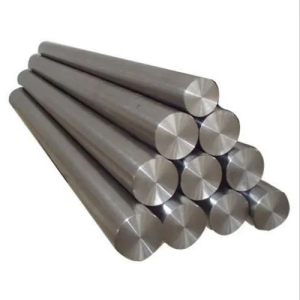
For some of the harshest operating situations found in manufacturing, Inconel is a material that has been carefully designed. Inconel has an unusually high-temperature tolerance compared to stainless steel and does not lose as much tensile strength at 2,000 degrees F as other steel types do.
Inconel 600 Pipe Fittings is a pricey material; hence it should only be used in specific situations where it will be effective and other materials won’t. In light of this, we present an overview of Inconel’s qualities as well as a few examples of applications where it would be preferable to use Inconel over the majority of stainless-steel compositions.
Five Inconel Pipe Uses
Oil & Gas Extraction
Due to its high-temperature tolerance and oxidation resistance qualities, Inconel is preferred for usage in the oil and gas production business. Super-alloy metals, like Inconel, are needed by the oil and gas industries because they can withstand harsh temperatures and corrosive, volatile gases.
For the processing systems required for the creation of natural gas, Inconel 625 super alloy is very beneficial. Inconel 625 Pipes are also utilized for the segregation of extracted fluids or for inline steel transfer pipes because of their exceptionally high thermal fatigue strength and oxidation resistance.
Heat Treat Applications
Inconel is regarded as a material that can withstand extremely high temperatures and still maintain sufficient tensile strength to support light loads. At 2,000 degrees Fahrenheit, Inconel 625 keeps its 13.3 KSI tensile strength. Because of this, Inconel is the ideal material for heat treatment applications—as opposed to stainless steel alloys such as Grade 304, 316, and 330 SS.
When hauling items through a harsh heat treatment process, a basket made of super alloys like Inconel won’t lose form as easily as one made of the majority of stainless-steel alloys.
Rapid Temperature Changes
Some manufacturing procedures can quickly follow high- and low-temperature operations. A single Inconel basket can be utilized in operations where temperatures range from close to cryogenic lows to heat treatment highs thanks to the remarkable oxidation tolerance of certain Inconel alloys at both high and low temperatures.
Saltwater Applications
Due to its outstanding endurance to sodium chloride (salt) at various temperatures, Inconel Alloy 600 Pipes are frequently used in maritime applications. Therefore, Inconel might be appropriate for washing basket parts in situations where procedures that employ salt are involved or in factories that are located near the seaside.
But some stainless-steel alloys also exhibit exceptional resistance to seawater. So, when will Inconel be viewed as the better option? In general, if high temperatures of greater than 1,000 degrees F were not a concern, this super alloy would actually be far more efficient than grade 316 stainless steel. At greater temperatures than 316 SS, Inconel can maintain its oxidation resistance.
Jet Engines
While cooling techniques can swiftly lower temperatures, they can also easily go beyond the limits of some metals. Despite frequent temperature variations brought on by the combustion cycle and cooling methods used in the aerospace industry, Inconel 600 maintains good oxidation tolerance and tensile strength. Because the oxidation tolerance of some metals would typically be weakened at high temperatures, Inconel is the best material when extreme temperature and chemical resistance are required.