
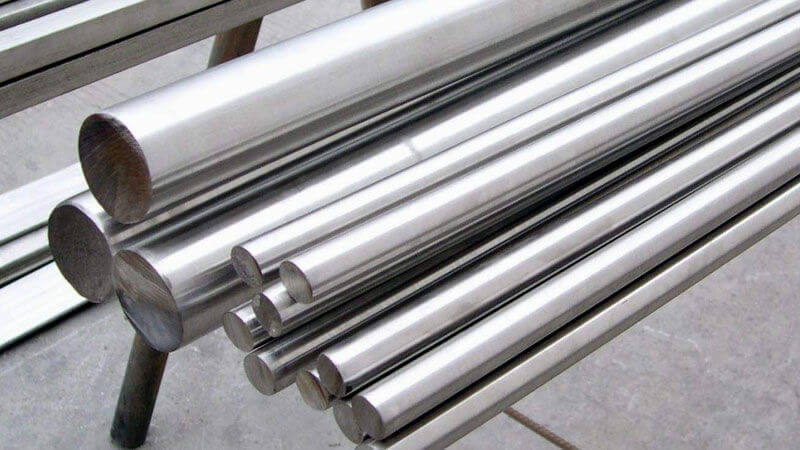
Stainless steel is a versatile alloy primarily made of iron, with chromium as the key alloying element. This chromium, when exposed to oxygen, forms a thin, invisible protective layer on the metal’s surface, shielding it from rust and corrosion. To qualify as stainless steel, the alloy must contain at least 10.5% chromium.
Remarkably, there are more than 150 grades of stainless steel, each designed for specific applications. These grades are categorized into five main types based on their internal structure at room temperature: Austenitic, Ferritic, Martensitic, Duplex, and Precipitation-Hardened. Among these, austenitic stainless steel is the most widely used, accounting for nearly 70% of global stainless steel consumption.
What Makes Austenitic Stainless Steel Unique?
Austenitic stainless steel stands out because of its face-centered cubic (FCC) crystal structure, making it non-magnetic and highly resistant to corrosion. Unlike other grades, it cannot be hardened through heat treatment but can become stronger through work hardening processes.
One of the most popular grades in this category is AISI 304. Known for its remarkable versatility, AISI 304 is used across numerous industries, thanks to its excellent mechanical properties and corrosion resistance. Whether it’s in the food industry, construction, or medical equipment, AISI 304 continues to be a go-to choice for its reliability and durability.
By understanding the unique features and applications of stainless steel grades, industries can make informed decisions to optimize their products and ensure long-lasting performance.
AISI 304 Stainless Steel Composition
AISI 304, commonly referred to as 18/8 stainless steel, gets its name from its composition—containing approximately 18% chromium and 8% nickel. These elements enhance the alloy’s corrosion resistance and overall strength. AISI 304 stainless steel is versatile and widely used in various applications. Below is a table showing some common suffixes used with 304 stainless steel, along with the major alterations in chemical composition:
| Suffix | Alteration | Properties |
|---|---|---|
| 304L | Lower carbon content | Improved weldability, reduced risk of carbide precipitation |
| 304H | Higher carbon content | Increased strength at elevated temperatures |
| 304N | Addition of nitrogen | Enhanced strength |
| 304LN | Lower carbon and addition of nitrogen | Combination of improved weldability and strength |
These variations allow AISI 304 to be tailored for specific needs, making it one of the most versatile grades of stainless steel available.
Properties of 304/304L Stainless Steel
Chemical Properties (as per Standard EN 10088-3:2014)
| Element | 304/1.4301 Composition (%) | 304L/1.4307 Composition (%) |
| Carbon (C) | Max. 0.07 | Max. 0.03 |
| Silicon (Si) | Max. 1.0 | Max. 1.0 |
| Manganese (Mn) | Max. 2.0 | Max. 2.0 |
| Phosphorous (P) | Max. 0.045 | Max. 0.045 |
| Sulfur (S) | Max. 0.030 | Max. 0.030 |
| Chromium (Cr) | 17.5-19.5 | 17.5-19.5 |
| Nickel (Ni) | 8.0-10.5 | 8.0-10.5 |
| Nitrogen (N) | Max. 0.11 | Max. 0.11 |
AISI 304 Mechanical Properties (as per Standard EN 10088-3:2014)
| Grade | Hardness (HBW) max. | (0.2%) Proof strength (MPa) min | Tensile strength (MPa) min. | Elongation after fracture (long. min.) | Impact energy (J) min. |
| 304/1.4301 | 215 | 190 | 500-700 | 45 | 100 |
| 304L/1.4307 | 215 | 175 | 500-700 | 45 | 100 |
Other Trade names of AISI 304 & 304L
| AISI | UNS | Europe (EN) | Japanese (JIS) |
| 304 | S30400 | 1.4301/ DIN X5CrNi 18-10 | JIS SUS304 |
| 304L | S30403 | 1.4307/ DIN X2CrNi18-9 | JIS SUS304L |
Characteristics of AISI 304
Strengths
- The grade can be drawn without any intermediate heat-softening process.
- It retains its properties well, especially toughness, even at cryogenic temperatures.
- In most cases, post-weld annealing is unnecessary to restore corrosion resistance.
- The 304L grade, with its low carbon content, is suitable for applications where minimizing carbide precipitation is important.
- The grade offers good resistance to most oxidizing acids.
- The material is effortless to clean and sterilize, making it ideal for hygienic applications.
Weakness
- Machinability of 304 is inferior to carbon steels. It is readily machined provided slower speeds and high feed rates with cutting fluids are used.
- 304 is susceptible to stress corrosion cracking. It has inferior corrosion in chloride and saline environments. Chloride ions cause localized pitting corrosion which compromises structural rigidity of the product.
Advantages and benefits of using AISI 304 Stainless Steel:
- Stainless Steel grade 304 is highly formable, easily weldable, and can be drawn without softening processes.
- Even at cryogenic temperatures, AISI 304 SS retains its properties.
- Post weld annealing is required to retain maximum corrosion resistance.
- Stainless Steel 304 offers excellent corrosion resistance.
Applications:
- Chemical Industry
- Kitchen equipment- sinks and consumer durables.
- Food processing components
- Flanges and Fasteners
- Architectural applications like roofing, doors, windows, etc.
- Aerospace Industry
- Heat exchangers, etc.
About Amigo Impex
Amigo Impex is a prominent name in the stainless steel manufacturing and trading industry in India. With over 10 years of expertise, the company delivers high-quality stainless steel products to customers across the globe. As the global demand for stainless steel continues to rise, Amigo Impex stands ready to meet the diverse needs of industries worldwide. We specialize in delivering high-quality, corrosion-resistant, durable, and low-maintenance stainless steel products, catering to both domestic and industrial applications.
At Amigo Impex, our stainless steel bright bars are manufactured using cutting-edge technology, ensuring superior surface finish and unmatched quality. This commitment to excellence has positioned us as a trusted name in the industry, offering a wide range of stainless steel products, including bright round bars, hexagonal bars, square bars, precision bars, polished bars, hardened bars, cold-drawn bars, and wires.
Below is a size chart for the products offered by the company:
| Product | State | Tolerance | Dimensions (mm) | Length (meters) |
|---|---|---|---|---|
| Round bars | Centerless ground & hot rolled | h9, h10, h11 | 6–100 | 2–6 |
| Square bars | Cold drawn | h11, h12 | 10–50 | 2–6 |
| Hex bars | Cold drawn | h11, h12 | 10–60 | 2–6 |
| Forged bars | Hot forged & machined | As per request | 50–400 | Custom lengths |
| Bright bars | Cold drawn & centerless polished | h9, h10 | 5–100 | 2–6 |

