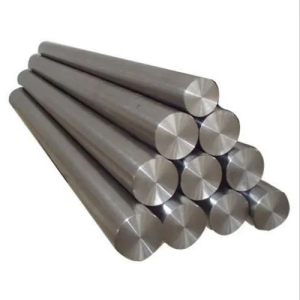
Inconel is a popular material in high-temperature applications, where strength, durability, and corrosion resistance are critical. Inconel alloys are nickel-based super alloys with distinctive properties to withstand extreme temperatures, chemicals, and pressures. Inconel 600 and Inconel 601 are two commonly used alloys due to their excellent mechanical properties, making them suitable for severe conditions. In this article, we aim to describe the similarities and differences between Inconel 600 and Inconel 601 and guide you to make an informed decision when choosing between these alloys.
What is Inconel 600 Rods and Inconel 601 Rods?
Inconel 600 and 601 Rods are high-performance nickel-chromium-based alloy rods used in various applications, including heat exchangers, pressure vessels, nuclear reactors and turbine components. The major difference between the two lies in their composition, with Inconel 600 containing more Niobium (Nb) than Inconel 601, which provides better corrosion resistance and is thus more suitable for acidic environments. Both alloys exhibit excellent strength over various temperatures, making them ideal for high-temperature steam systems and highly corrosive chemical processing operations. Compared to other alloys, these rods also provide superb resistance to chloride stress cracking and pitting corrosion in oxidizing and reducing atmospheres.
Difference Between Inconel 600 Rods & Inconel 601 Rods
Composition
Inconel 600 and Inconel 601 are both nickel-chromium-iron alloys with additions of other elements like copper, manganese, and aluminium, among others. Adding these elements enhances excellent properties such as resistance to high-temperature oxidation, corrosion resistance, and high mechanical strength. However, Inconel 600 contains a higher concentration of nickel, which makes it more resistant to corrosion in harsh reducing environments such as acids but less resistant to oxidation at high temperatures. In contrast, Inconel 601 has a higher content of aluminium, which enhances its resistance to high-temperature oxidation and corrosion. As a result, Inconel 601 is more suitable for applications under high-temperature and oxidizing conditions.
Mechanical Properties
Inconel 600 and Inconel 601 offer high strength, excellent stability, and good flexibility. However, Inconel 600 has a higher tensile and yield strength than Inconel 601. This implies that Inconel 600 suits high-stress applications such as furnace fixtures, heat exchangers, and petrochemical refineries. Meanwhile, Inconel 601, a superior oxidation-resistant alloy, is ideal for gas turbine components, industrial furnace parts, and radiant tubes. Additionally, Inconel 601 exhibits better weld ability than Inconel 600, making it a good choice for welding.
Heat Resistance
Heat resistance is a property that dictates the ability of a material to maintain its shape, structure, and strength under extreme temperatures. Both Inconel 600 and Inconel 601 have excellent heat resistance properties, with a maximum working temperature of 1100°C and 1250°C, respectively. However, Inconel 601 outperforms Inconel 600 in high-temperature applications due to its high resistance to both oxidation and corrosion. Inconel 601’s superior strength and creep resistance at elevated temperatures make it ideal for use in environments that experience thermal cycling, such as combustion zones, petrochemical processing, and industrial furnaces.
Other Applications
Other applications where Inconel 600 and Inconel 601 exhibit their unique properties include chemical processing, aerospace, power generation, and nuclear reactors. Inconel 600 is widely used in the chemical industry to resist oxidative chemicals and oxidizing acids. On the other hand, Inconel 601 is commonly used in the aerospace industry for its high-temperature properties and excellent oxidation and corrosion resistance.
Conclusion:
Inconel 600 and Inconel 601 are nickel-based alloys with exceptional properties in high-temperature applications. Although these alloys are similar in many aspects, they exhibit some differences that make them suitable for specific purposes. Therefore, it is essential to analyze the specific requirements of your application before choosing between Inconel 600 and Inconel 601. We hope this article has provided insights into the differences between these alloys, making it easier to make an informed decision.