
Amigo Impex operates as a Stainless Steel 316 & 316L forging manufacturer, supplier, stockist and exporter serving OEM programmes across PAN India and export markets in the USA, the Gulf, Europe and Asia. Production follows ASTM A182, which designates the grades F316 (UNS S31600) and F316L (UNS S31603); ASME SA182 covers pressure-part orders and ASTM A473 covers general industrial forgings.
Both forged 316 and 316 L are austenitic stainless steels carrying 16.0–18.0% chromium with a 2.00–3.00% molybdenum addition, and molybdenum is what holds off pitting in chloride media. Carbon separates the pair: grade 316 permits 0.08% max, while 316L is held to 0.030% max, so weld zones resist intergranular attack without further heat treatment. Minimum tensile strength stands at 515 MPa for F316 and 485 MPa for F316L, both solution-annealed.

European and Japanese drawings use different code names (EN 1.4401/1.4404 and SUS316/316L) for the same broad grade family. We forge rings, discs, shafts, blocks, round bars and flange blanks against order drawings, then finish cutting, machining, threading, fabrication, testing and packing in-house, so tolerances don't pass through outside shops. Finished 316/316L forged components are used in chemical plants, offshore platforms, pump and valve assemblies and food-processing lines.
Urgent stock items leave from Mumbai within 1 to 2 days, with documentation handled jointly. Pricing is quoted per kilogram in both INR and USD. Amigo Impex holds AS 9120B, PED, ISO 9001:2015 and ISO 45001:2018 certifications, and every consignment travels with a mill test certificate.
Amigo Impex manufactures SS 316 / 316L forgings to the parameters listed here, and dual certification to F316/F316L is arranged where a single stock has to meet welded and non-welded duties on one order.
Three specifications sit behind 316/316L forging supply. A182 answers pressure-boundary components; its ASME counterpart, SA182 applies to boiler and pressure vessel code work, and A473 takes in general industrial stainless forgings.
| Standard | Coverage |
|---|---|
| ASTM A182 F316 / F316L | Forged flanges, valve parts and pressure components for high-temperature service |
| ASME SA182 F316 / F316L | Boiler and pressure vessel code orders |
| ASTM A473 Type 316 / 316L | Stainless steel forgings for general industrial service |
Because international standards designate 316 and 316L grades differently, this reference table clarifies the accepted chemical components to support material acceptance and QA verification.
| Element | Grade 316 (UNS S31600) % | Grade 316L (UNS S31603) % |
|---|---|---|
| Carbon (C) | 0.08 max | 0.030 max |
| Manganese (Mn) | 2.00 max | 2.00 max |
| Phosphorus (P) | 0.045 max | 0.045 max |
| Sulphur (S) | 0.030 max | 0.030 max |
| Silicon (Si) | 1.00 max | 1.00 max |
| Chromium (Cr) | 16.0–18.0 | 16.0–18.0 |
| Nickel (Ni) | 10.0–14.0 | 10.0–15.0 |
| Molybdenum (Mo) | 2.00–3.00 | 2.00–3.00 |
| Nitrogen (N) | 0.10 max | 0.10 max |
Solution-annealed material meets the SA182 minimums below. F316L has 30 MPa less tensile strength and 35 MPa less yield strength than F316. For non-pressure parts, this rarely changes the design, but for flanges and pressure components, it does matter: ASME B16.5 places F316 in Material Group 2.2 and F316L in the lower-rated Group 2.3, so confirm the pressure–temperature rating for the grade you specify.
Note: For F316L, sections exceeding 5 in. (127 mm) have a reduced minimum tensile strength of 65 ksi (450 MPa) per ASTM A182.
| Property | F316, min | F316L, min |
|---|---|---|
| Tensile Strength | 515 MPa (75 ksi) | 485 MPa (70 ksi) |
| Yield Strength (0.2% offset) | 205 MPa (30 ksi) | 170 MPa (25 ksi) |
| Elongation in 50 mm | 30% | 30% |
| Reduction of Area | 50% | 50% |
To verify equivalence across international engineering drawings and mill certificates, use the grade equivalency chart below to match UNS S31600 and UNS S31603 with global standards.
| Country / System | Grade 316 | Grade 316L |
|---|---|---|
| USA (UNS) | S31600 | S31603 |
| Europe (EN / W.Nr.) | 1.4401 / X5CrNiMo17-12-2 | 1.4404 / X2CrNiMo17-12-2 |
| Japan (JIS) | SUS316 (SUS F316 forged) | SUS316L |
| UK (BS) | 316S31 | 316S11 |
| France (AFNOR) | Z6CND17-12 | Z3CND17-12-02 |
| Russia (GOST, approximate) | 08Kh17N13M2 | 03Kh17N14M3 |
| China (GB) | 06Cr17Ni12Mo2 | 022Cr17Ni12Mo2 |
| India (IS 6603) | X04Cr17Ni12Mo2 | X02Cr17Ni12Mo2 |
Amigo Impex forges the below-given component types in either grade, working from order drawings; machining and threading finish in-house where a drawing calls for them.
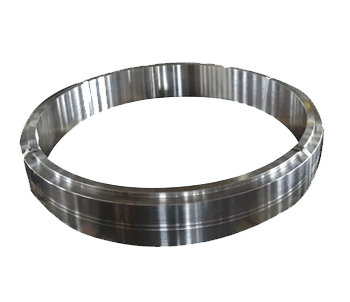
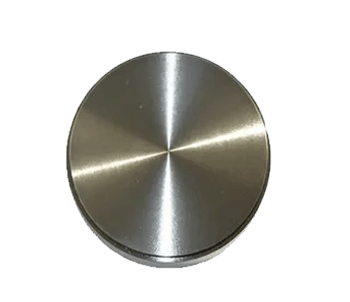
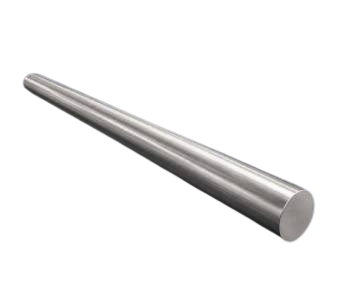
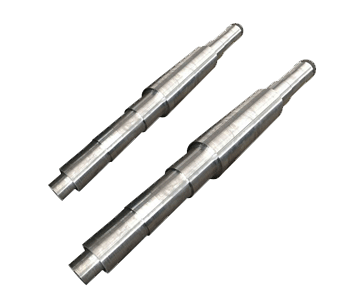

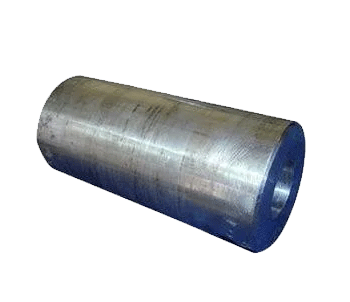
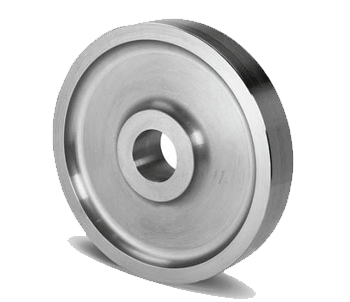
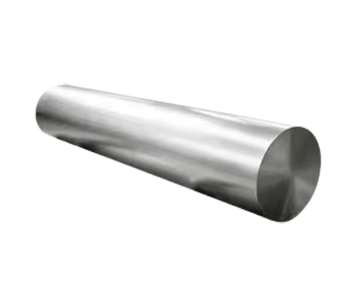

We package all forgings in wooden boxes, crates, or tight bundles according to shipment volume, applying seaworthy protective wraps for international sea freight. For domestic Indian orders, customers select between direct door delivery and ex-warehouse pickup.
Every package carries stamped heat numbers, material grades, and exact dimensions. Physical test certificates ship alongside the cargo, keeping heat-melt traceability intact from the steel mill to final delivery.
A Stainless Steel 316 & 316L forging price is worked out per kilogram, quoted in INR for domestic supply and USD for export. As a market reference, 316L material trades near ₹310 per kg (US$3.25 per kg) in India; a finished forging prices above that base once forging work, solution annealing, machining allowance and testing are added. A fixed price list is not published because rates move with four variables: grade, piece weight, section and quantity.
60–70 tonnes held in Mumbai, with urgent requirements dispatched within one to two days.
AS 9120B, PED, ISO 9001:2015 and ISO 45001:2018, with an MTC on every order.
Cutting, machining, threading, fabrication and testing all handled at our own Mumbai facility.
Original mill certificates plus our own test reports, so every batch can be traced back.
Non-standard sizes and specifications made to order.
Dispatched from Mumbai to every major Indian city, and exported to USA, Gulf, Europe, Asia
316 and 316L forge well on press and hammer equipment. They do run stronger at heat than carbon steel, so the press tonnage and reheat cycles are planned for that, but the working range itself is wide enough for normal production practice.
Grade 316L belongs on any forging that will be welded or left in the as-welded condition; 0.030% max carbon keeps weld heat-affected zones free of chromium carbide precipitation. Chloride pitting resistance is the same in both grades, since the molybdenum content is identical.
Forging of 316 and 316L runs between 2100-2300°F (1150-1260°C), and work stops once a piece cools toward 1700°F (927°C).
Every 316 and 316L forging is solution annealed after forging, a step that restores the corrosion resistance the alloy held before hot deformation.
No, SS 316 and 316L forgings don't respond to a magnet in the annealed condition; slight magnetism can develop where a part has been cold-worked.
ASTM A182 covers 316 and 316L forgings for pressure service under the grade symbols F316 and F316L, while ASTM A473 takes in general industrial stainless forgings.
The following industries specify SS 316 and 316L forged components for chloride-exposed and hygienic duties:


