
Amigo Impex is a trusted stainless steel forging manufacturer and supplier in Mumbai, India, established in 2013; supply covers pan-India, with exports to Europe, the Gulf, Asia and the USA. Sixteen stainless grades are forged here: austenitic 304L through 904L, martensitic 410, 420, 422 and 440C, and the precipitation-hardening trio of 15-5 PH, 17-4 PH and PH 13-8.
We work to ASTM A182 / ASME SA-182 on pressure-rated parts up to its 4,540 kg limit, to ASTM A336 / A336M above that weight, and to ASTM A473 on general engineering items, at piece weights from 0.5 kg to 5,000 kg. Open die, closed die and seamless rolled ring processes shape shafts, rings, discs and valve bodies to the geometry an order drawing fixes. Cutting, threading, machining, fabrication, packing and testing run inside our own works, keeping dimensional control under one roof.

We hold ISO 9001:2015, ISO 45001:2018 and AS9120B certifications, and an EN 10204:2004 type 3.1 inspection certificate travels with each dispatch. Finished forgings serve pump, valve, oil and gas, aerospace and defence programmes. Rates are set per kilogram; stocked material dispatches in one to two days, while made-to-order pieces follow in about 30 days. Share the part drawing, grade and quantity to receive feasibility, weight and a quotation.
The table below explains the standard, grade, finishes and certifications of Stainless Steel Forgings.
Several specifications cover stainless steel forgings, and no single one covers every grade. The correct listing depends on the grade family and on whether a part is pressure-rated, general engineering or age hardened.
| Standard | Scope |
|---|---|
| ASTM A182 / ASME SA-182 | Forged or rolled pipe flanges, forged fittings, and valves and parts for high-temperature service; covers austenitic F304L, F310, F316L, F317L, F321, F347 and F904L, limited to 4,540 kg per piece |
| ASTM A336 / A336M | Alloy and stainless steel forgings for pressure and high-temperature parts; the route for pressure-rated forgings above the 4,540 kg ceiling of A182 |
| ASTM A473 | Austenitic, austenitic-ferritic, ferritic and martensitic stainless forgings for general engineering duty; PH grades are not covered |
| ASTM A961 / A961M | General requirements for forged steel piping components supplied to A182 |
| ASTM A788 / A788M | General requirements for steel forgings supplied to A473 |
| ASTM A705 / A705M | Age-hardening stainless forgings: 15-5 PH, 17-4 PH and PH 13-8 |
| ASTM A484 / A484M | Common requirements on testing, tolerances and marking for stainless bars, billets, shapes and forgings supplied to A705 and A564 |
| SAE AMS5655 | 422 bars, wire and forgings, hardened and tempered (UNS S42200) |
| SAE AMS5630 | 440C bars, wire, forgings and forging stock, 17Cr-0.52Mo |
Our range spans 16 stainless steel grades across austenitic, martensitic and precipitation-hardening families. Grade choice fixes the material against its service medium, so each entry below names its anchor duty.
Stainless Steel 304L forging is the low-carbon austenitic product, shaped into machine components, hygienic process parts and welded assemblies that enter service without post-weld heat treatment.
Grade 310 forgings hold their strength in furnace atmospheres. Radiant tube supports, burner blocks and kiln hardware are forged in this heat-resisting grade.
SS 316 & 316L forgings carry molybdenum for chloride service, holding up in process water to roughly 2,000 ppm chloride. Forged pump internals, valve bodies and fittings suit chemical and general process duty; at full-strength seawater, near 19,000 ppm chloride, the enquiry moves to 904L or a 6Mo / super duplex grade.
A richer molybdenum addition places 317 & 317L forged parts in flue gas scrubbers, bleach washers and pulp digesters handling hot acidic liquor.
Stainless Steel 321 forging relies on titanium stabilisation through thermal cycling, which suits forged exhaust collars, expansion bellows hardware and boiler mountings.
Grade 347 forgings are niobium-stabilised for refinery heaters and steam circuit components that sit at temperatures over long campaigns.
SS 904L forging answers dilute sulphuric and phosphoric acid duty at moderate temperature. Copper with 4.5% molybdenum carries the acid resistance, while 25% nickel guards against chloride stress corrosion cracking, protecting forged agitator shafts and acid plant pump components.
Stainless Steel 410 forging that quench-hardens for wear duty, anchoring forged turbine components, wellhead parts and hardened shafting in one martensitic grade.
Grade 420 forgings serve mould blocks, shear blades and cutlery tooling, where a higher carbon martensitic structure takes a fine working edge.
SS 422 forging belongs to steam turbines: forged blades, bolting and rotor hardware run in this creep-resisting martensitic grade, supplied to SAE AMS5655.
Bearing races, hardened balls and pump seats are forged in 440C, the high-carbon martensitic grade that reaches roughly HRC 60 after hardening and tempering, the highest hardness of any stainless steel.
Stainless Steel 15-5 PH forging pairs aged strength with transverse toughness, an anchor combination for helicopter rotor parts and actuator components.
Grade 17-4 PH forgings follow ASTM A705 and are used for age-hardened strength in oilfield equipment, pump shafting and aerospace brackets.
PH 13-8 forging combines aged strength with high fracture toughness, forged for airframe lugs, landing gear links and flap tracks.
Forging stainless steel follows four routes, and geometry, tolerance and order quantity decide between them. Open die, closed die, seamless rolled ring and the hot or cold path are set out below.
Open die forging works a heated billet between flat dies with no enclosing cavity. Large, simple shapes at short run lengths suit the route, since no dedicated tooling is needed.
In closed die forging, the impression die route presses a stainless billet into a machined cavity. Repeat parts come out near net shape, and tooling cost spreads across the quantity.
Seamless rolled ring forging expands a pierced blank into a ring with grain flow running unbroken around the circumference. Flange blanks, bearing seats and gear rings take this route.
Most stainless forging is done hot. Austenitic grades in particular carry a high flow stress and work-harden very fast, so large cold deformations stall before the shape is finished. Cold forging stays viable for small, high-volume parts such as fasteners and cold-headed components that can absorb the work hardening.
Size feasibility isn't a catalogue question for forgings, because piece weight and process route govern what can be produced. The envelope verified for our stainless steel forgings is tabled below.
| Parameter | Range |
|---|---|
| Weight per piece | 0.5 kg to 5,000 kg; pressure-rated pieces above 4,540 kg move from A182 to A336 |
| Dimensions | Produced to order drawing and specification |
| Size governed by | Open die for large sections; closed die set by tooling; ring mill for rings |
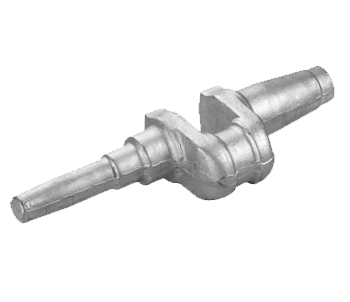
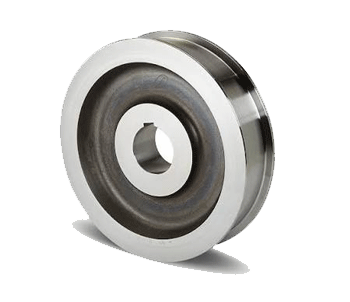
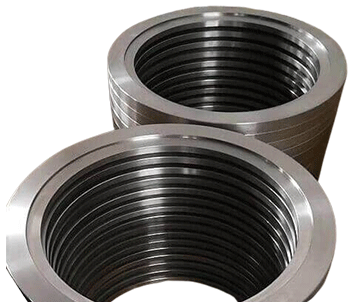
The list gathers stainless steel forged components produced across all 16 grades. Crane and gear items answer Indian process-plant demand; the remainder serve rotating, transmission and pressure equipment.
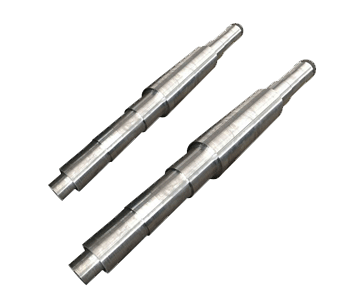
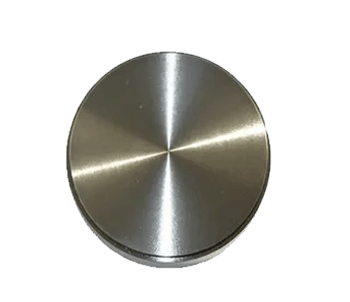

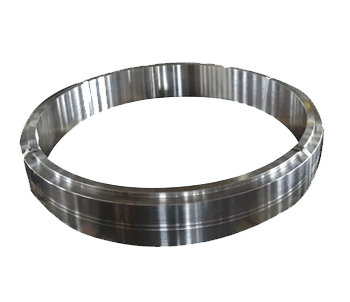


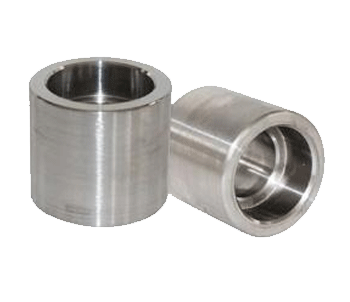
Contact Amigo Impex with the grade for the latest Stainless steel forging price in the current INR or USD rate.
Request a QuoteStandard austenitic grades such as 304L, 316L, 317L and 321 are forged between 1150°C and 1260°C, with deformation stopped as the workpiece cools toward 927°C; 347 is held to a 1149°C to 1232°C start. Grade 310 works in its own window, roughly 1120°C down to a 980°C finish, because it loses hot ductility above that band and forms sigma phase or sensitises below it. Super austenitic 904L is hot formed between about 1150°C and 850°C and solution annealed at 1050°C to 1150°C, the range ASTM A182 sets for F904L. 17-4 PH, an ageing grade, soaks at 1177°C to 1204°C and finishes above 1010°C. Every austenitic forging is solution annealed and quenched afterwards, with ASTM A182 setting a 1040°C minimum for F304L, F310, F316L, F321 and F347.
Forgings leave from our facility in wooden crates, pallet boxes, or steel-strapped bundles, sized to the order volume. Export consignments get VCI wrapping and moisture barriers before container loading. Domestic buyers in India choose door delivery or collect from the warehouse.
Each piece carries a hard-stamped heat number, grade marking, and size, with EN 10204:2004 type 3.1 inspection certificates enclosed in the same dispatch so traceability holds from melt to receipt.
60–70 tonnes held in Mumbai, with urgent requirements dispatched within one to two days.
AS 9120B, PED, ISO 9001:2015 and ISO 45001:2018, with an MTC on every order.
Cutting, machining, threading, fabrication and testing all handled at our own Mumbai facility.
Original mill certificates plus our own test reports, so every batch can be traced back.
Non-standard sizes and specifications made to order.
Dispatched from Mumbai to every major Indian city, and exported to USA, Gulf, Europe, Asia
Stainless steel forges successfully at production scale. It needs higher forging loads than carbon steel because it is stronger at forging temperature, and it has to be worked within tighter temperature limits to avoid microstructural damage. That combination is why the work sits with specialists.
Forged stainless steel carries directional grain flow following the part shape, so fatigue strength and toughness exceed those of a casting, which solidifies with random grain and can trap porosity. Loaded rotating parts favour forgings.
16 grades are forged: 304L, 310, 316 & 316L, 317 & 317L, 321, 347, 904L, 410, 420, 422, 440C, 15-5 PH, 17-4 PH and PH 13-8.
Open die, closed die, seamless rolled ring and cold-forged types are supplied, with hot working behind most stainless production.
5,000 kg per piece is our maximum forged weight, and the smallest items start near 0.5 kg. ASTM A182 itself caps at 4,540 kg per piece, so pressure-rated forgings above that weight are supplied to ASTM A336/A336M. Geometry and process set the exact ceiling.
Stainless steel is usually forged between 1150°C and 1260°C for standard austenitic grades; 310 runs its own 1120°C to 980°C window, 904L forges between 1150°C and 850°C, and 17-4 PH soaks at 1177°C to 1204°C.
Corrosion resistant stainless steel forgings components carry duty-critical loads across these 8 industries in India and overseas markets:


