
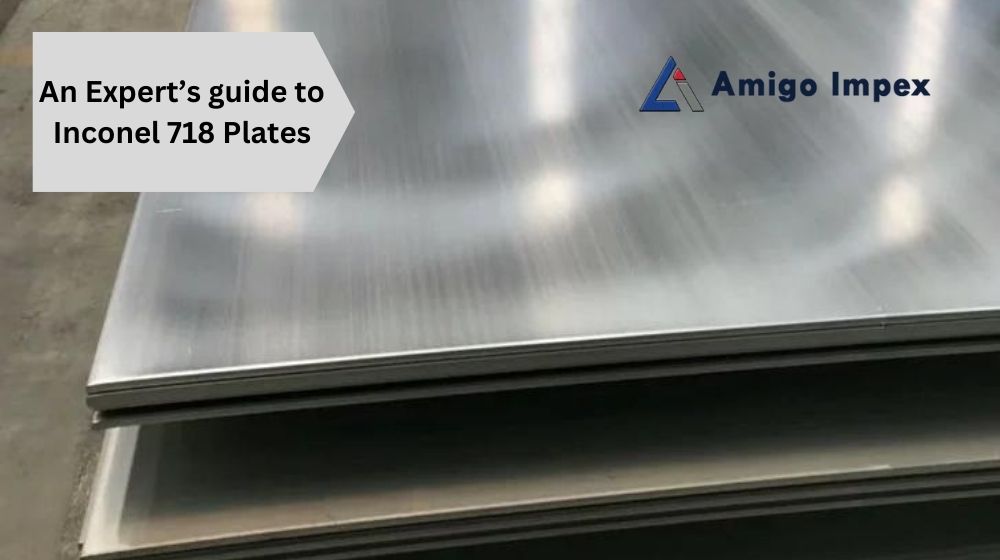
Inconel 718 is a corrosion-resistant and heat-resistant nickel-chromium alloy. Due to its excellent characteristics, Inconel 718 is widely used in the aerospace, energy, automotive, and chemical industries. Among the various forms of Inconel 718, plates are the most frequently used in various applications. In this blog post, we will provide an expert’s guide to Inconel 718 plates, including the composition, properties, manufacturing process, applications, and common defects of Inconel 718 plates.
What is Inconel 718 Plates?
These plates are corrosion and oxidation-resistant metal alloys primarily used in aerospace applications. These high-tensile strength plates contain high amounts of nickel, chromium, molybdenum and nitrogen for superior stiffness and strength at temperatures up to 1300°F (704°C). Their superior formability makes them perfect for fabricating simple or complex shapes without worrying about warping or cracking. In addition, these plates can withstand extreme fatigue thanks to their excellent creep rupture properties – even when exposed to caustic chemicals such as hydrochloric acid. This combination of properties makes them ideal for constructing engine parts in gas turbine engines due to their consistent performance under extreme conditions. Furthermore, they are also popularly used in the construction of space vehicles due to their lightweight nature and heat tolerance capabilities.
Expert’s Guide to Inconel 718 Plates
Composition of Inconel 718 Plates:
These plates comprise nickel, chromium, iron, niobium, molybdenum, titanium, and aluminium. The amount of each element varies, but nickel and chromium are the major elements. The composition of these plates determines their unique properties, such as excellent corrosion resistance, high-temperature resistance (up to 700 °C), high strength, and good weld ability.
Properties of Inconel 718 Plates:
These plates are nickel-based super alloy that is generally wieldable and heat treatable. It offers good strength and excellent corrosion resistance in high and lower temperatures, making it suitable for cryogenic applications. Additionally, it has superior metallurgical stability and creep rupture strength at elevated temperatures, allowing for higher operational working pressures. This alloy also has excellent fracture toughness properties and fatigue resistance capabilities. It shows excellent load oxidation resistance, which makes them ideal for aerospace engine components or exhaust systems management units.
These plates have excellent mechanical properties, such as high tensile strength, yield strength, and creep strength. In addition, they have good fatigue resistance, fracture toughness, and resistance to pitting, crevice, and intergranular corrosion. Moreover, these plates can maintain their mechanical properties at high temperatures, making them suitable for high-temperature environments.
Manufacturing Process of Inconel 718 Plates:
Several manufacturing methods exist for these plates, including hot rolling, cold rolling, and annealing. Among them, hot rolling is the most common method involving rolling the ingot into a plate at high temperatures. Then, the plate is annealed and quenched to improve its mechanical properties. Cold rolling is used for producing thinner plates with precise dimensions. Annealing removes the internal stress and improves the elasticity of these plates.
Applications of Inconel 718 Plates:
These plates are widely used in various industries due to their excellent properties. In the aerospace industry, these plates are used for making turbine blades, exhaust ducts, and other high-temperature components. These plates are used in the energy industry for making pressure vessels, heat exchangers, and piping systems. In the chemical industry, these plates are used for making reactors, pumps, and valves. In addition, these plates are used in the automotive industry for making high-performance engines and exhaust systems.
Common Defects of Inconel 718 Plates:
Despite their excellent properties, these plates may have some defects, such as cracks, voids, inclusions, and surface roughness. Cracks and voids may occur during the manufacturing process or service life of these plates. Inclusions are foreign particles that can reduce the mechanical properties of these plates. Surface roughness may affect the corrosion resistance and aesthetic appearance of these plates. Therefore, it is important to inspect, test, and evaluate these plates to ensure their quality and reliability.
Conclusion
Inconel 718 plates are important materials in various industries due to their excellent properties. The composition, properties, manufacturing process, applications, and common defects of Inconel 718 plates have been discussed in this blog post. By understanding these aspects, designers, engineers, and users can make better use of these plates and avoid potential issues. Furthermore, ongoing research and development are necessary to improve the performance and affordability of these plates in the future.

