
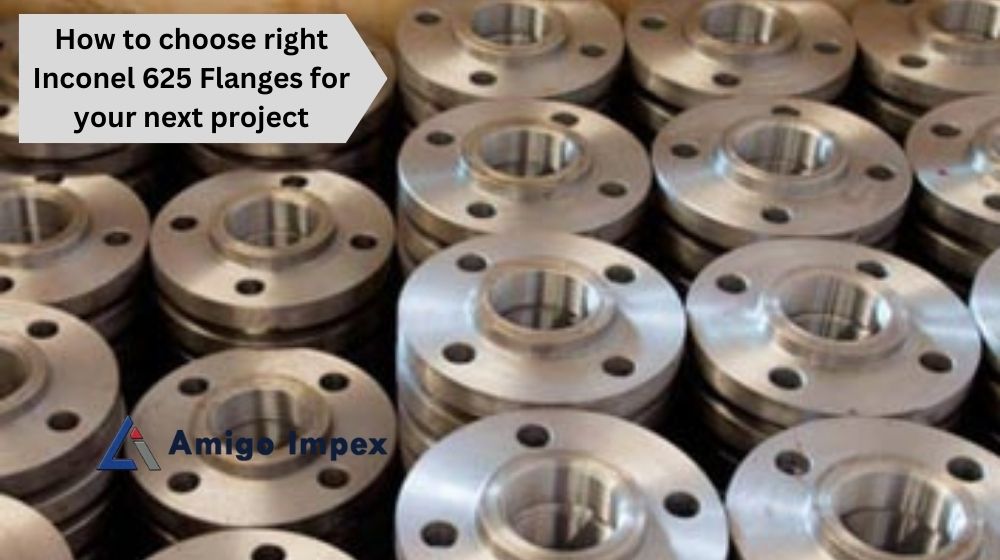
When it comes to engineering projects, choosing the right flanges is crucial to ensure the safety and reliability of the final product. Inconel 625 is a popular flange material due to its excellent resistance to high temperatures, corrosion, and stress corrosion cracking. However, with so many available options, it can be overwhelming to choose the right Inconel 625 flange for your project. This guide will discuss the important factors to consider to choose the right flanges for your next project.
What is Inconel 625 Flanges?
Inconel 625 Flanges are components used in piping and other industrial equipment due to their corrosion resistance and strength. It is a nickel-base alloy containing chromium, molybdenum, niobium, and iron as major elements. Its high strength and oxidation resistance at temperatures up to 2000°F make Inconel 625 ideal for manufacturing pipeline flanges with welding or brazing methods. It is also renowned for its excellent fatigue strength, fracture toughness, low thermal expansion rate, stress corrosive cracking resistant properties and superior formability needed for flanging operations. Additionally, Inconel 625 Flanges have outstanding age-hardening characteristics enabling them to be used in extreme environments such as the nuclear industry or petrochemical plants.
How to choose right Inconel 625 Flanges
Material Grade
Inconel 625 flanges come in different grades, such as ASTM B564, UNS N06625, and ASME SB564. The grade you choose will depend on the specific requirements of your project. The ASTM B564 grade is ideal for general purposes, while the UNS N06625 is used for high-pressure and high-temperature applications. The ASME SB564 suits industries that demand strict dimensional tolerance and surface smoothness.
Flange Type
Inconel 625 flanges come in various types, such as weld neck, slip-on, blind, socket weld, threaded, and lap joint flanges. Your flange type will depend on the piping system design, pressure conditions, and maintenance requirements. For high-pressure applications, weld neck flanges are ideal, while threaded and slip-on flanges are suitable for low-pressure applications.
Flange Size
The size of the flange you choose will depend on the size of the pipe it will connect to. The standard sizes range from 1/2″ to 60″. It is crucial to ensure that the flange size matches the pipe size to avoid leaks and safety hazards.
Flange Facing and Finish
The flange facing and finish are critical factors that affect the integrity of the joint. The flange facing refers to the surface where the gasket will be placed, and the finish refers to the surface smoothness. Different flange facings, such as raised face, flat face, and ring type joint, are available in Inconel Flanges. The finish must meet the specifications to ensure the gasket can seat properly and the joint is leak-free.
Flange facing removes material from pipe flange surfaces to make them level and even. This process is typically used to provide a better seal between two mating flanges or to smooth out any imperfections, such as corrosion. The typical finish on a flange should be no less than 64 micro inches RMS (Root Mean Square). Typical methods for achieving this include machining with single-point turning tools, grinding with an abrasive wheel, or using belt-driven sanders; however, other processes like electrochemical machining can also be used. All surface finishes must be free from rust and scale before assembly is complete.
Certification and Quality Control
Choosing Inconel 625 flanges from a reputable manufacturer is crucial to ensure the quality and reliability of the flanges. Look for manufacturers with a rigorous quality control process and certifications, such as ISO 9001 or AS9100, ensuring the flanges meet the required standards and specifications.
Conclusion
Choosing the right Inconel 625 flanges for your next project is important to ensure the final product’s safety, reliability, and durability. It is crucial to consider factors such as material grade, flange type, size, facing, finish, and certification when selecting Inconel 625 flanges. The right flange selection will ensure the joints are leak-proof, reduce downtime, and prevent safety hazards. When searching for Inconel 625 flanges, always choose a reliable manufacturer that can provide quality products and certifications to meet your project’s specific needs.

